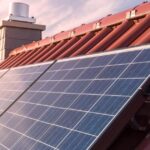


Clarkson Valley decided not to move forward with plans to limit residential solar panel installations in the city.
The Board of Aldermen had contemplated imposing stricter requirements, especially for roof-mounted solar systems.
At the board’s June 2 meeting, two bills were introduced for consideration.
The first proposed bill would have eliminated “devices for the generation of energy, such as solar panels and similar devices” as an accessory use in the city code. Additionally, it would have removed language from special use regulations stating that “solar energy systems may be approved by the board of aldermen.” Under this bill, solar panels would only need relevant permits from the city.
The second bill would have updated the city’s land use code with a new chapter governing solar energy systems.
The proposed regulations would have required solar energy collectors to be installed on back- or side-facing roofs only. Front-facing roofs of primary or accessory structures would have been prohibited from solar installations.
These new regulations would have allowed solar energy collectors on front-facing roofs solely when not visible from the street due to elevation, topography, or berms. Additional requirements would have mandated symmetrical positioning of solar energy collectors and applied similar rules to ground-mounted systems.
Many residents attended the June 2 meeting to express concerns about these proposed new regulations.
Frances Babb, a strong advocate for solar energy, previously won a lawsuit against Clarkson Valley over solar panels and helped block comparable solar restrictions in Wildwood.
Babb noted that a properly designed solar energy system can generate six figures in electricity over its lifetime.
Babb emphasized that Missouri law considers the right to use solar energy as a property right.
“Unfortunately, protecting those rights often requires legal action,” she stated.
Bryan Meyers referenced a legal precedent established in the Missouri Supreme Court case Eikmeier v. Granite Springs Homeowners Association, which determined that an association’s ban on street-facing solar panels reduced efficiency and cost-effectiveness and therefore could not be upheld under state law.
The bill removing solar energy systems from accessory land uses and special use regulations was passed.
The bill proposing new solar energy system regulations failed to pass.